
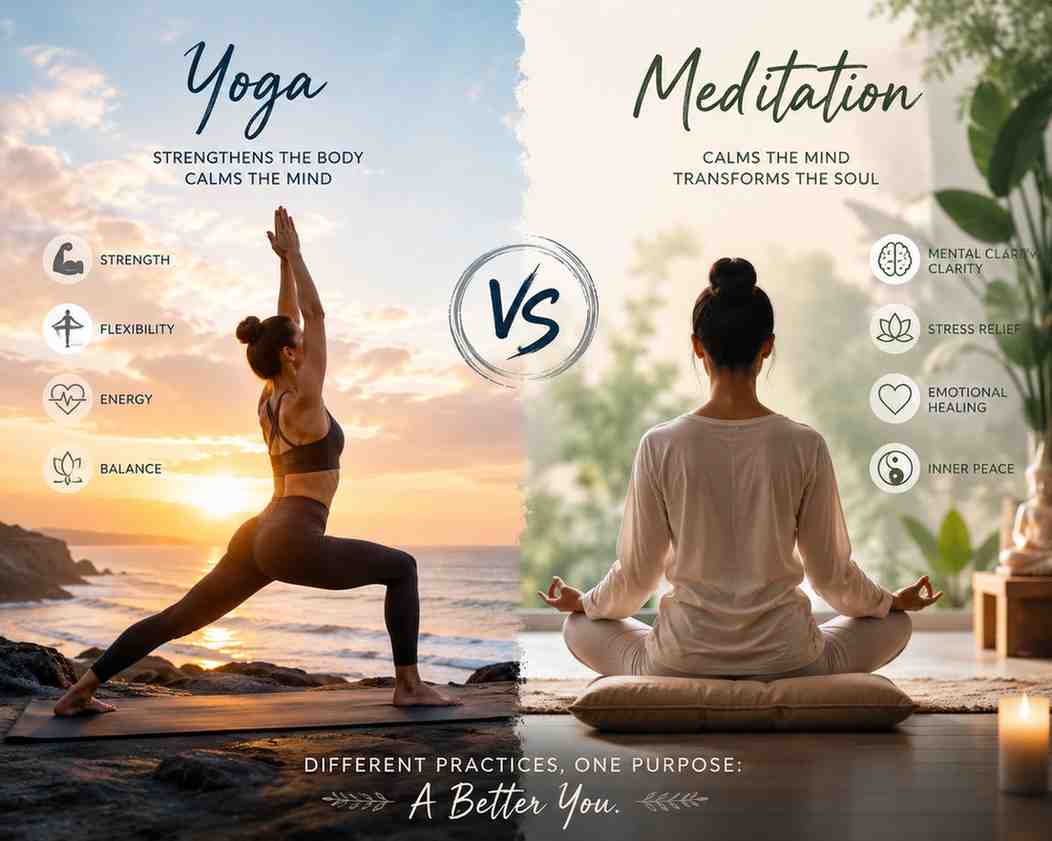
In today’s fast-paced world, mental peace has become one of the most valuable aspects of a healthy life. Stress, anxiety, work pressure, social media overload, and lifestyle-related challenges often affect our emotional and mental well-being. As people search for natural and holistic ways to find balance, two ancient practices stand out: Yoga and Meditation.
Many people wonder whether yoga or meditation is better for mental peace. The truth is that both offer remarkable benefits, but they work in different ways. Understanding their unique roles can help you choose the right practice or combine both for optimal mental wellness. At VYASA Kolkata, we understand you needs and hence we provide the best yoga and meditation classes in Tollygunge with some of the best yoga instructors to fullfil you needs.
Understanding Yoga –when it comes to differentiating Yoga and mediation
Yoga is a holistic discipline that originated in ancient India thousands of years ago. It combines physical postures (asanas), breathing techniques (pranayama), relaxation methods, and mindfulness practices to create harmony between the body and mind.
The word “Yoga” comes from the Sanskrit word Yuj, meaning “to unite” or “to join.” Yoga aims to connect the body, mind, and spirit, helping individuals achieve overall well-being.
Regular yoga practice improves flexibility, strength, balance, posture, and physical health. More importantly, it has profound effects on mental health by reducing stress, calming the nervous system, and promoting emotional stability.
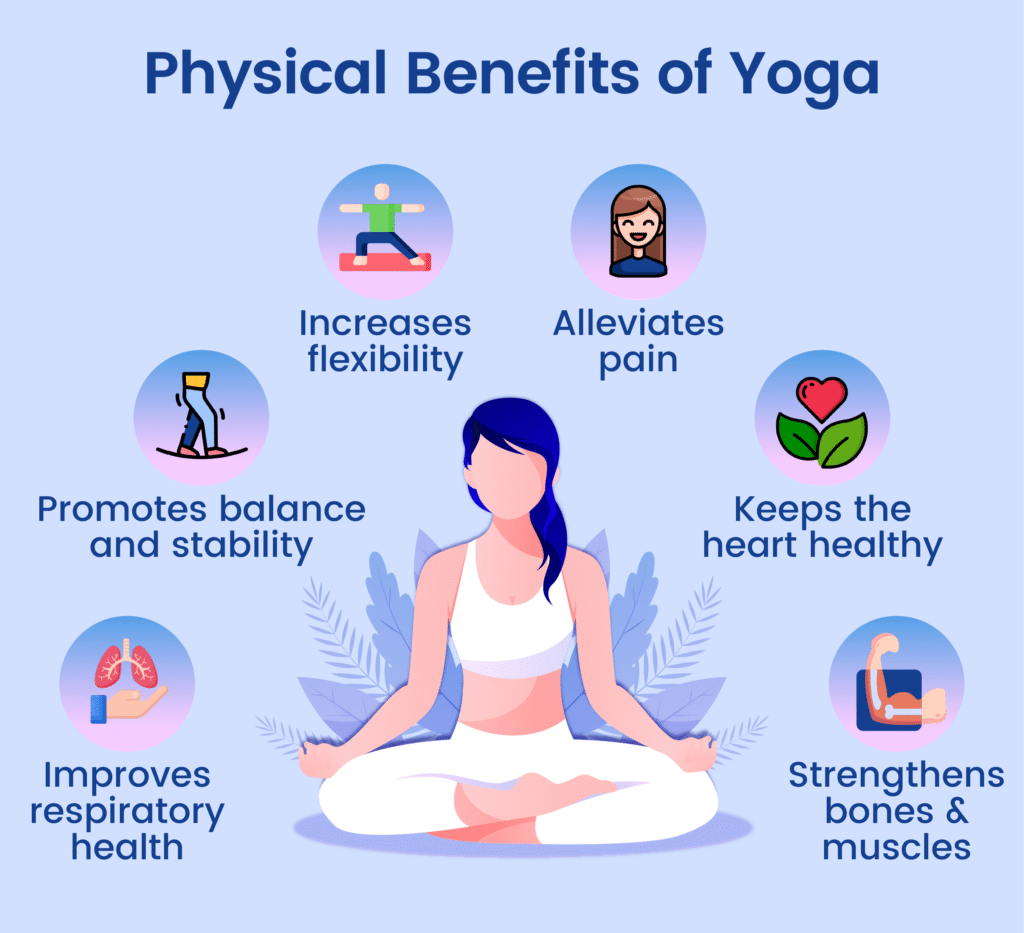
How Yoga Promotes Mental Peace
Yoga influences mental well-being through several mechanisms:
- Reduces stress hormones such as cortisol
- Improves blood circulation and oxygen flow
- Relaxes tense muscles
- Enhances concentration and mental clarity
- Encourages mindful awareness
- Improves sleep quality
- Balances emotions
Practices such as Shavasana, Balasana (Child’s Pose), Sukhasana, and gentle stretching exercises are particularly effective in promoting relaxation and reducing anxiety.
Understanding Meditation– differentiating Yoga and mediation
Meditation is the practice of focusing the mind to achieve a state of calmness, awareness, and inner peace. Unlike yoga, meditation does not primarily involve physical movement. Instead, it trains the mind to remain present and free from distractions.
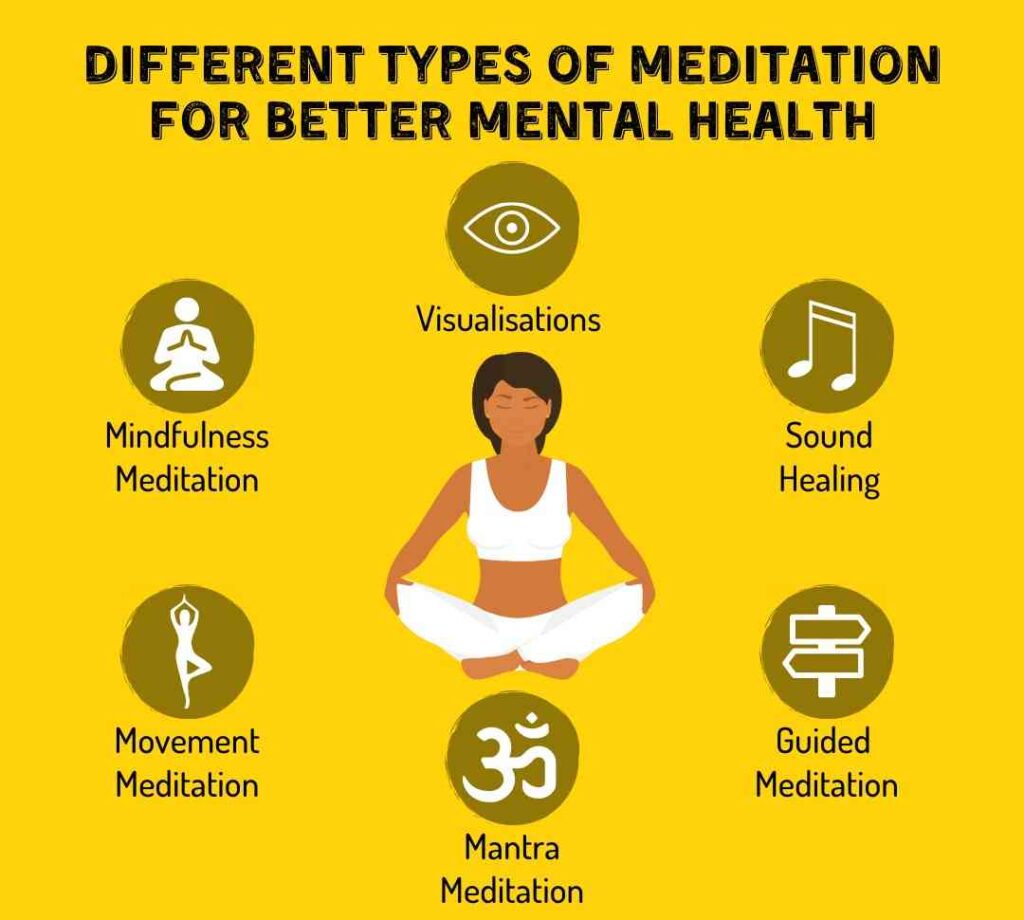
Meditation can take many forms, including:
- Mindfulness Meditation
- Guided Meditation
- Breath Awareness Meditation
- Mantra Meditation
- Loving-Kindness Meditation
- Yoga Nidra
The primary goal of meditation is to quiet mental chatter and cultivate a deeper awareness of the present moment.
How Meditation Promotes Mental Peace
Meditation directly impacts the mind and nervous system by:
- Reducing anxiety and stress
- Improving emotional regulation
- Increasing self-awareness
- Enhancing focus and concentration
- Lowering blood pressure
- Improving sleep quality
- Creating a sense of inner calm
Studies have shown that consistent meditation can positively affect brain function, emotional resilience, and overall mental health.
Key Differences between Yoga and Meditation
Although yoga and meditation are closely connected, they differ in their approach.
Physical Activity
Yoga involves physical postures and movement. Meditation primarily involves sitting or lying down while focusing the mind.
Focus Area
Yoga works on both the body and mind simultaneously. Meditation focuses mainly on mental and emotional well-being.
Energy Expenditure
Yoga requires physical effort and movement. Meditation requires mental focus but minimal physical activity.
Accessibility
Meditation can be practiced almost anywhere without special equipment. Yoga may require a comfortable space and guidance for proper posture.
Immediate Benefits
Yoga often provides instant physical relaxation along with mental calmness. Meditation gradually develops deeper mental peace through consistent practice.
Which Is Better for Mental Peace between Yoga and Meditation?
The answer depends on individual needs and preferences.
Choose Yoga If:
- You find it difficult to sit still.
- You experience physical tension and stiffness.
- You want both physical fitness and mental wellness.
- You prefer active forms of stress relief.
- You are looking for a complete mind-body practice.
Yoga helps release accumulated stress stored in the muscles and body, making it particularly beneficial for people with sedentary lifestyles and high stress levels.
Choose Meditation If:
- You want to improve mental focus.
- You seek deeper self-awareness.
- You struggle with anxiety and overthinking.
- You prefer a quiet and reflective practice.
- You want to cultivate emotional balance.
Meditation can be highly effective for individuals seeking inner stillness and improved emotional resilience.
Why Combining Yoga and Meditation Works Best
Rather than choosing one over the other, many wellness experts recommend integrating both practices into daily life.
Yoga prepares the body for meditation by releasing physical tension and improving circulation. Once the body is relaxed, meditation becomes easier and more effective.
A simple daily routine may include:
- Gentle yoga stretches for 15–20 minutes.
- Breathing exercises (Pranayama) for 5–10 minutes.
- Meditation for 10–20 minutes.
This combination creates a powerful synergy that supports physical health, emotional stability, and mental peace.
Scientific Benefits of Yoga and Meditation
Research has demonstrated that both yoga and meditation positively impact mental health.
Benefits Supported by Research
- Reduced symptoms of anxiety and depression
- Improved mood and emotional balance
- Better sleep quality
- Enhanced focus and productivity
- Lower stress levels
- Improved nervous system function
- Increased resilience to life’s challenges
Regular practice helps activate the parasympathetic nervous system, often referred to as the body’s “rest and digest” mode, which promotes relaxation and recovery.
How Beginners Can Start Yoga and Meditation
If you are new to wellness practices, begin with small and manageable steps.
Beginner Yoga Routine
- 10 minutes of stretching
- Basic yoga postures
- Deep breathing exercises
- Relaxation in Shavasana
Beginner Meditation Routine
- Sit comfortably
- Focus on your breath
- Observe thoughts without judgment
- Practice for 5–10 minutes daily
Consistency is more important than duration. Even a few minutes of daily practice can create noticeable improvements in mental well-being.
Experience Authentic Yoga and Meditation at VYASA Kolkata
At VYASA Kolkata, we believe that true wellness begins with a balanced mind and healthy body. Our expert instructors guide students through traditional yoga practices, meditation techniques, pranayama, relaxation methods, and holistic wellness programs designed to support mental peace and overall health.
Whether you are looking to reduce stress, improve focus, manage anxiety, or enhance your quality of life, our personalized yoga and meditation sessions can help you achieve your wellness goals naturally.
Conclusion
When it comes to mental peace, both yoga and meditation offer powerful benefits. Yoga calms the mind through movement, breathing, and physical relaxation, while meditation cultivates inner stillness, awareness, and emotional balance.
VYASA Kolkata has the best Yoga and meditation classes for all age groups in Tollygunge that is guided by experienced instructors. The Yoga centre is located in Tollygunge areas and accessible through bus, and metro. For people travelling through the metro, the nearest metro station is Mahanayak Uttam Kumar metro station. You can take a 10 minutes walk after getting down at Tollygunge metro station to reach the location. For people living near Jadavpur, Jodhpur Park, Rabindra Sarobar, Lake Garden, Golf Green and other areas and searching for the yoga and meditation classes near me, then VYASA Kolkata is the name you can completely trust for your health.
Start your yoga journey today to see the positive changes within. 💫
